
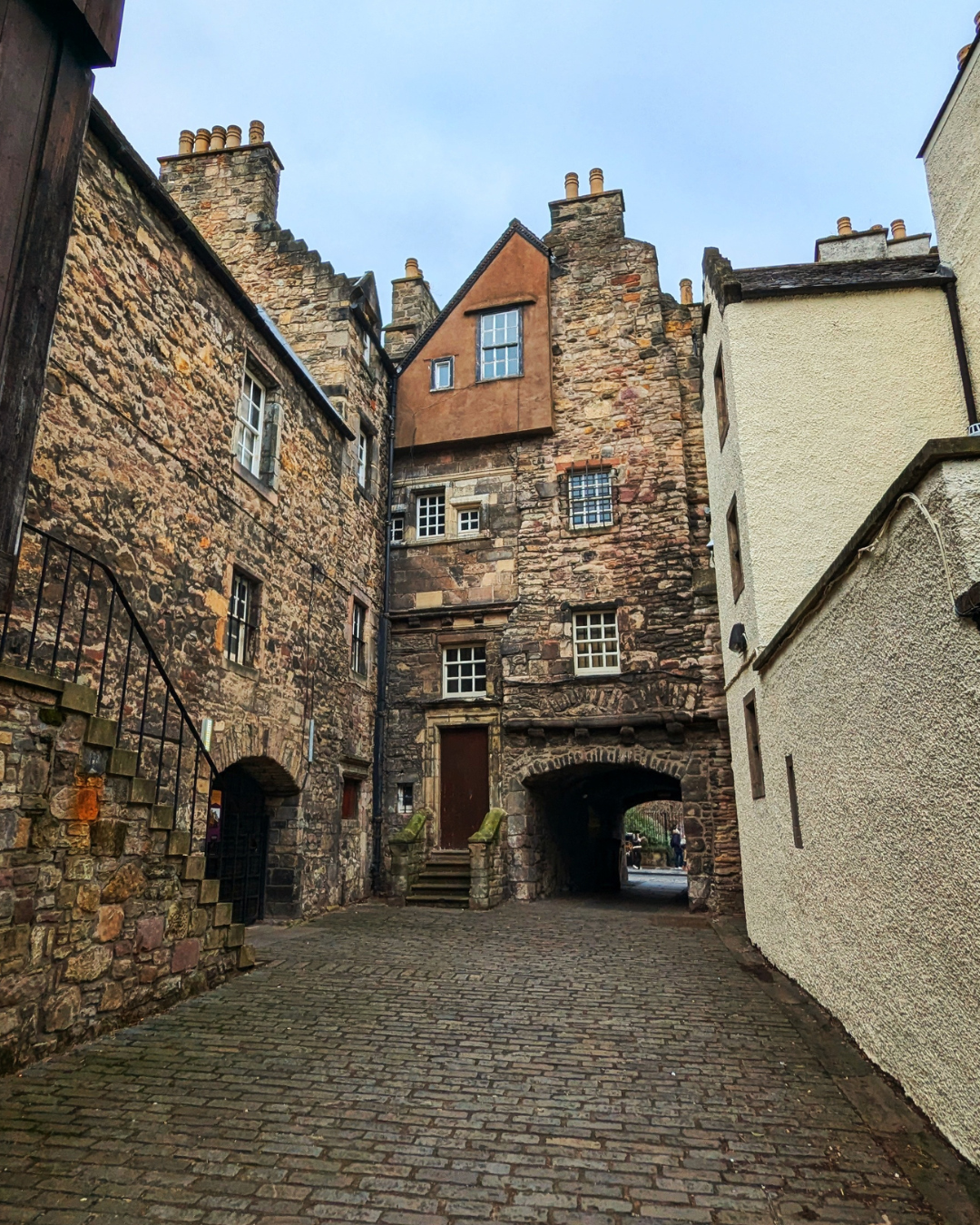
Walking down Edinburgh’s Royal Mile is like stepping into a living museum. Stretching from the historic Edinburgh Castle to the grand Palace of Holyroodhouse, this cobbled street is one of the most iconic thoroughfares in Scotland. But while many visitors are drawn to the towering landmarks and lively shops, some of the city’s most fascinating stories lie hidden in plain sight—in the narrow, ancient alleyways known as closes.
These Royal Mile Edinburgh closes are more than just passageways; they are remnants of medieval Edinburgh, echoing with centuries of daily life, drama, and quiet beauty. Some are well-preserved, others delightfully forgotten, but all offer a glimpse into a side of the city that’s easy to miss unless you know where to look.
Here are the 4 most beautiful closes on the Royal Mile, where history, architecture, and atmosphere come together in unforgettable ways.


1. Bakehouse Close – A Step Back in Time
📍 Location: Canongate (near the Museum of Edinburgh)
🎯 Best for: History lovers and Outlander fans
Tucked away near the bottom of the Royal Mile, Bakehouse Close is one of Edinburgh’s best-preserved 16th-century closes. Its high stone walls, timber-framed buildings, and quiet atmosphere create a setting that feels almost untouched by time.
It’s no wonder this close was used as a filming location for the popular TV series Outlander—fans will recognize it as the exterior of Jamie Fraser’s print shop. But even if you’re not following in the footsteps of Claire and Jamie, the charm of this close is undeniable. There’s something deeply evocative about standing in a place where real people once lived, worked, and endured the trials of life in the old city.
Many passersby walk straight past the discreet entrance, but those who turn in find a beautifully preserved slice of medieval Edinburgh that rewards curiosity.
2. White Horse Close – Storybook Charm Meets History
📍 Location: Near the foot of the Royal Mile, off Canongate
🎯 Best for: Photographers and lovers of hidden gems
If you’re looking for a close that feels like it’s been plucked from a fairytale, White Horse Close is the one. With its whitewashed buildings, red-tiled roofs, and quaint central courtyard, this hidden oasis is unexpectedly picturesque. It’s also a spot steeped in legend.
The close is said to be named after the white horse of Queen Mary of Scots, stabled here in the 16th century. Whether or not that tale is true, the close has long been associated with coaching inns and travel. In fact, it once served as the terminus for stagecoaches heading to London.
Today, it’s one of the most photogenic and tranquil closes in Edinburgh—perfect for a quiet moment away from the crowds, or a stunning photo opportunity that feels worlds away from the busy Royal Mile just steps outside.
3. James Court – Echoes of Enlightenment
📍 Location: Near the top of the Royal Mile, close to the Castle
🎯 Best for: Architecture buffs and literary enthusiasts
Situated near Edinburgh Castle, James Court is a hidden gem with a storied past. Its grand façades and open courtyard offer a striking contrast to the more shadowy closes farther down the Mile. This was once a desirable address during the Scottish Enlightenment, and its former residents included none other than philosopher David Hume.
Although part of the original court was damaged by fire, it’s been sympathetically restored and remains one of the most impressive architectural enclaves in the Old Town. Standing here, surrounded by history, you can almost imagine the spirited conversations and radical ideas that once echoed off the stone walls.
For those interested in the intellectual and cultural roots of Edinburgh, James Court is not to be missed.
4. Dunbar’s Close – A Secret Garden in the Heart of the City
📍 Location: Canongate, opposite Canongate Kirk
🎯 Best for: Garden lovers and those seeking peace and quiet
Arguably the most unexpected of all the Royal Mile closes, Dunbar’s Close is not just an alleyway—it’s a portal to a 17th-century-style garden, completely free and open to the public.
Walk through the unassuming stone passage, and you’ll emerge into a beautifully laid-out garden with trimmed hedges, gravel paths, and secluded benches. The air seems to shift as you enter, muffling the sounds of the city and inviting reflection.